
The bigger the crowd the more negligible the individual becomes. But if the individual, overwhelmed by the sense of his own puniness and impotence, should feel that his life has lost its meaning—which, after all, is not identical with public welfare and higher standards of living—then he is already on the road to State slavery and, without knowing or wanting it, has become its proselyte. The man who looks only outside and quails before the big battalions has nothing with which to combat the evidence of his senses and his reason. But that is just what is happening today: we are all fascinated and overawed by statistical truths and large numbers and are daily apprised of the nullity and futility of the individual personality, since it is not represented and personified by any mass organization. Conversely, those personages who strut about on the world stage and whose voices are heard far and wide seem, to the uncritical public, to be borne along on some mass movement or on the tide of public opinion and for this reason are either applauded or execrated. Since mass suggestion plays the predominant role here, it remains a moot point whether their message is their own, for which they are personally responsible, or whether they merely function as a megaphone for collective opinion.
C.G. Jung, The Undiscovered Self, ¶503
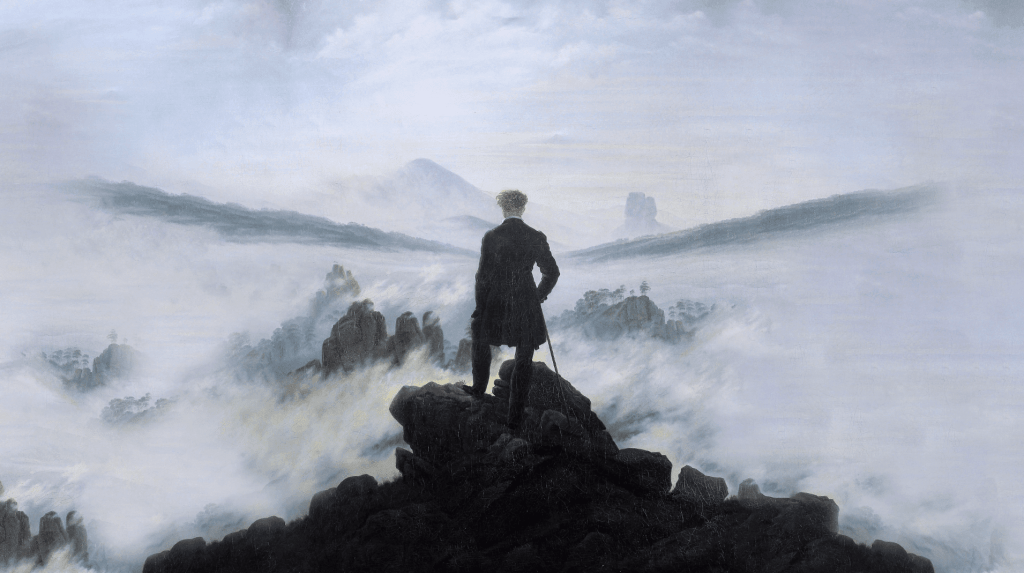
When nearly everything is quantified, tracked, and systematized, we can almost miss entirely the reality of the individual soul.
Carl Jung wrote in the mid-20th century, what he saw and experiences with great clarity. In his book, The Undiscovered Self, he warns that the rise of scientific rationalism, mass society, and state-centered ideologies, have gradually eliminated the dignity of the individual. The modern person is no longer seen as a unique and meaningful center of experience, but rather as “a mere abstract number in the bureau of statistics.”
If we believe this perspective, we begin to see ourselves as interchangeable units in the machinery of society. We distrust our inner voices, deny our symbolic lives, and feel ashamed of holding to anything that cannot be measured, packaged, or explained rationally.
This is the great inversion of modern life:
What is most essential and cannot be reduced – is treated as negligible.
While what is most superficial and can be calculated – is treated as truth.
The more we identify with the crowd, the more we lose access to the very thing that makes us human: our ability to wrestle inwardly, to choose, to suffer consciously, and to respond with meaning to the challenges in our lives.
Jung wasn’t against science, he was an empirical scientist of the human psyche, of the soul. He examined the phenomenas that presented themselves in himself, his patients, and in the human body of spirit – myths, religions, cultures. And at the same time, Jung insisted that there’s a limit to what science can grasp. The individual human being is not a “case”, a “type” or a “data point”. They are a mystery unfolding – in their suffering, longing, and irreducible complexity. If we wish to understand ourselves and others deeply, we must be willing to let go of collective categories, labels, and assumptions.
We must listen.
We must suffer with.
We must see what lives, not what fits the theory, with courage to contain the mess and irrationality of the one standing before us.
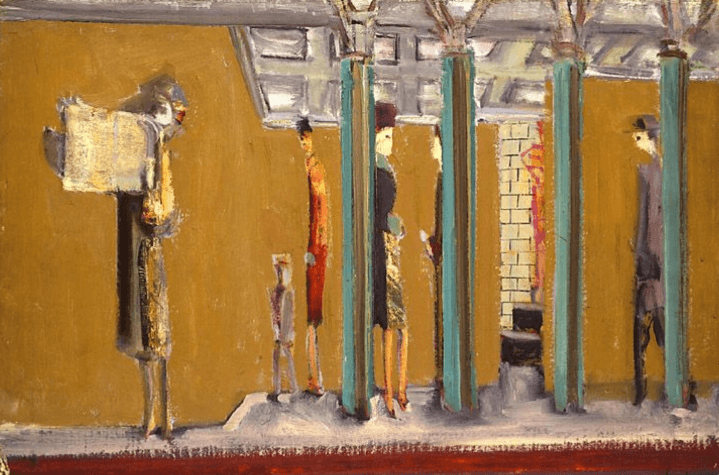
“Judged scientifically, the individual is nothing but a unit which repeats itself ad infinitum… For understanding, on the other hand, it is just the unique individual human being… who is the supreme and only real object of investigation.” (¶497)
This tension between the schematic and the soulful, between knowledge and understanding, is not just a challenge for doctors or therapists. It is a challenge for all of us.
We live in systems that prefer averages. We are taught to idealize the normal.
We are surrounded by voices, algorithms, and institutions that encourage identification with the group – political, social, moral, or otherwise.
But the soul does not speak in statistics.
It whispers in dreams, in symptoms, in strange fascinations and resistances, in the private battles we fight in the middle of the night.
It speaks in symbols, not slogans.
It demands that we become whole, not perfect or outwardly successful.
To live as an individual in this age is to risk being misunderstood.
To take up responsibility for one’s own life, truth, and path – even when it contradicts the collective – is a kind of sacred rebellion.
But it is precisely this that Jung considered essential to the future of humanity.
For if we lose the individual, we lose the only vessel in which consciousness can live and grow.
If we become entirely adapted to mass movements, outer norms, and external standards, then our freedom, moral discernment, and connection to the sacred are all slowly dying.
“The goal and meaning of individual life (which is the only real life) no longer lie in individual development but in the policy of the State.” (¶499)
We must turn inward, to rediscover the ground from which we might meet it differently.
Not to escape the world.
We must cultivate a relationship with our own depth, contradictions, and symbolic life – so that we are not unconsciously absorbed into the collective tides.
We must remember that our soul is not negligible.
No matter how loud the world becomes.
No matter how convincing the statistics may seem.
No matter how many stand in line, saying: “This is the way.”
The individual remains the bearer of meaning.
And the rediscovery of the soul – your soul – is the ground of everything real.
Leave a Reply