“…Her infantile world wants to come to an end and be replaced by the adult phase.
The wish of young girls to die is often only an indirect expression of this, but it remains a pose even if they really do die, for even death can be dramatized.
Such an outcome merely makes the pose more effective.That the highest summit of life can be expressed through the symbolism of death is a well-known fact, for any growing beyond oneself means death. As an infantile person, Miss Miller cannot realize what her task is in life; she cannot set herself any goal or standard for which she feels responsible.
Therefore she is not yet prepared to accept the problem of love either, for this demands full consciousness and responsibility, circumspection and foresight. It is a decision in favour of life, at whose end death stands. Love and death have not a little to do with one another.”
~ C. G. Jung, Symbols of Transformation, §432

There’s a calling you hear~
not with your ears,
but in the aching silence between activities.
It does not shout, it waits.
You know it.
It dreams you at night.
It moves when you’re still.
It is the scent of Nineveh (meaning and vocation) on the wind,
though you’ve booked passage for Tarshish (flight and distraction).
Why do we run from the voice that knows us best?
Because it asks everything.
It asks for the death of who we’ve been pretending to be.
It does not promise success nor comfort.
Jonah ran.
We run too.
We don’t necessarily flee with our feet,
we flee with our screens,
our perfect plans,
our endless giving to others,
our cynicism disguised as insight.
We flee by staying busy and small.

When we run for long enough,
the patience of the Center wears off,
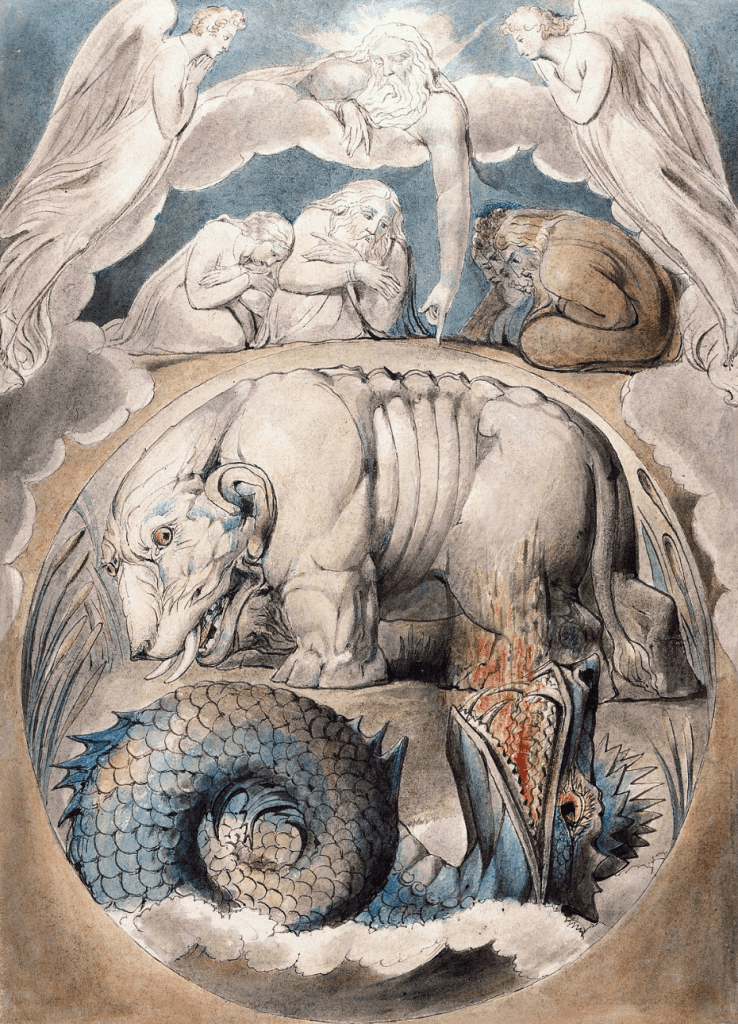
and its whales start searching for us.
Then we fall into the deep,
and find no floor beneath our striving.
There, in the acid-dark belly of our fear~
we may find the seed.
The one we buried
when we decided to survive instead of become.
We can’t fake our way out of the belly.
We must digest and be digested.
Let what is not us dissolve.
Pray with our guts for our own renewed integrity,
and the grace to be able to breathe fresh air once more.
Make peace with the dark.
And wait for the sea to spit us back onto the path.
It’s about returning – stripped and humble –
to the one who’s been calling all along.
Jung wrote that “any growing beyond oneself means death.”
And so, when we resist the calling,
it may not be the path we fear—
but the end of our pose,
the unraveling of a familiar identity.
As Jung put it,
“Her infantile world wants to come to an end and be replaced by the adult phase…
That the highest summit of life can be expressed through the symbolism of death is a well-known fact, for any growing beyond oneself means death.”
The journey toward Nineveh asks not just action, but maturity~
the capacity to love with foresight, to commit with responsibility,
to choose life in full knowledge that death stands at its end. And in its way.
Love and death, Jung reminds us, “have not a little to do with one another.”
If we pause, and try to feel again what speaks within us,
what calls us forward,
we might be courageous enough
to see the vision that makes us tremble,
while not running away from its demands.
We need not leap.
But we do need to turn.
Face what we’ve been fleeing.
Name the fear.
Hold it consciously.
And step, just one step at a time,
toward Nineveh.
Let the whale rest.

Leave a Reply