Something essential has gone missing in our modern consciousness.
Its absence fragments us – leaving life cold, hollow, stripped of meaning.
What’s lost is the symbolic approach to life.
It vanished alongside the dismissal of emotion and intuition – exiled by a consciousness that worships reason, measurement, and the appearance of things.
But there is another language.
A subtler, older tongue – of symbols, images, and living forms – that once carried the soul’s reality.
Now, we speak in abstract signs and trust only what can be dissected or quantified.
Yet the psyche does not speak this language.
And life, real life, does not either.
The soul is not an epiphenomenon.
It is mystery to be met.
Science, at its best, reveals only a part of the picture.
The other part – what can only be felt, intuited, or experienced – is far greater in scope.
To ignore this immeasurable dimension is to lose contact with the deeper layers of self and world.
What happens to a culture – or a psyche – that treats more than half of its reality as irrelevant?
Alienation. Fragmentation. Loss of soul.
Jung held that the intuitive and emotional elements are indispensable for truly encountering and experiencing the psyche. Without them, we cannot meet the psyche on its own terms – only dissect it from a distance.
And when we do that, we fragment life itself.
Modern culture represses the symbolic function.
This is not a sudden wound, but the outcome of centuries that privileged abstraction over experience.
Reason slowly replaced intuition. Utility overtook meaning.
What once belonged to the soul has been dismissed as mystical or irrational.
The felt sense of being has been sterilized.
And that produces a sick human being.
But for Jung, the symbol is not a decoration of thought.
It is a vital bridge: between seen and unseen, ego and Self.
It is not a metaphor for what we already know,
but a vessel for what we do not know – and perhaps never will.
But our world fears the unknown.
Technological culture demands certainty and control.
And so, symbols have been degraded into signs – mere labels for what is already understood.
Feeling has been cast into shadow.
Emotion appears only as spectacle or pathology, never as a valid way of knowing.
Intuition survives in the arts, perhaps – but is excluded from serious discourse.
The consequences are dire.
When intuition and feeling are not valued, they return through the back door of neurosis, compulsion, and emotionally destructive acting-out.
The repressed returns.
That which is not integrated always threatens to overwhelm and sabotage the one-sided ego – so that it may transform, mature, balance.
Modern man suffers most of all from a poverty of meaning.
We are told to solve our lives like equations, with ready-made, one-size-fits-all formulas.
But suffering doesn’t yield to logic.
Nor does love. Nor grief. Nor the search for purpose.
Man is lost in the endless sea of meaningless facts.
Entranced by the outer world, mesmerized by the flute of sterile rationality.
He drifts away from the richness and depth of his inner world – his own soul.
The rational mind cannot offer a reason to endure suffering, or to love, or to sacrifice.
It cannot help him grieve. Only the symbolic can do that.
Dreams, myths, and art – as gestures of the soul – can carry us across despair’s threshold, and help us to connect with hope and courage.
The true post-modern consciousness will recover what has been lost as a radical reintegration.
To live symbolically is not to abandon reason,
but to situate it within a greater whole.
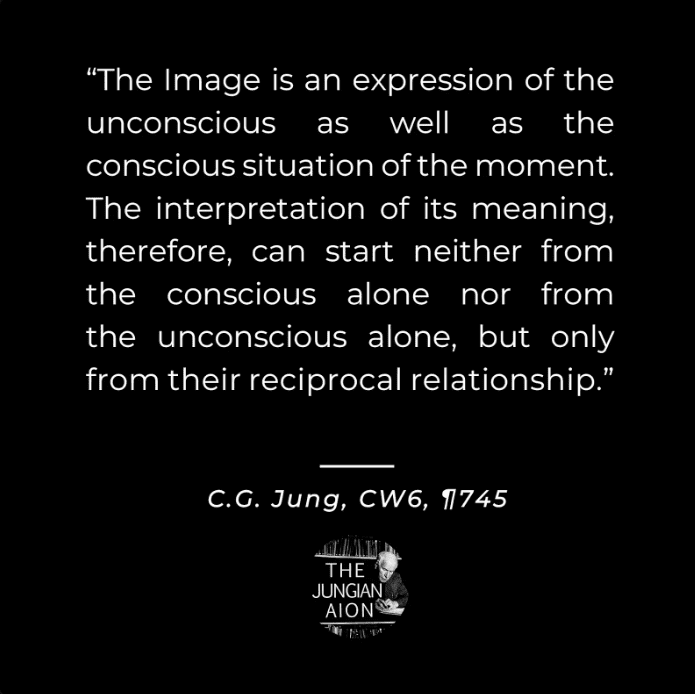
It is to acknowledge that the psyche speaks in images,
and that healing comes not through control,
but through relationship – with inner figures, with mystery, with soul.
A symbol, as Jung said, is the best possible expression of something still becoming known.
It does not rise from the ego, but from the depths.
It is not passive – it is active, and creative.
It wants something.
Like a seed, it contains the potential to transform into a larger life.
Unlike metaphor, which refers to what we understand,
a living symbol points to what we do not yet know – what longs to become conscious.
It does not just point beyond itself, it brings the beyond closer – a healing recognition that we are part of something greater.
To live symbolically is to consent to be moved.
To feel what stirs in the depths,
even if it cannot be named, categorized, or explained.
It is to trust that what lives in us – grief, awe, longing, fear, hope – is not merely personal,
but part of a vast archetypal unfolding in human history and experience.
We are being addressed by something more than us.
This realization often arrives as a painful defeat – a shattering, humbling encounter with the Self, the Center and circumference of the psyche.
The moment this becomes more than an idea – when it becomes experience – something shifts.
We do not live in a world of disconnected facts.
We live in an interconnected field of meaning.
Without the symbolic, we starve in the midst of abundance.
We forget who we are.
We do not reject thought – but rather place it in service to something greater.
And in doing so, we remember what it means to be fully, deeply, and meaningfully human – or at the very least, less divided, less blind, and less alone.
To live symbolically is not to escape the world,
but to reenter it
with the heart awake
and the soul engaged.
It is to make room for what cannot be explained,
yet overflows with life.
Leave a Reply